How Far in Advance Can You Meal Prep?
- How far in advance can you meal prep?
- Use a two-cook week for five workdays
- Plan five meals as components, not five identical boxes
- What should you prepare early?
- Build the calendar before shopping
- Cool each batch promptly
- Use the freezer for days beyond the fridge plan
- Reheat the portion, not the entire batch
- Adapt the rhythm to your week
- Audit the plan after Friday
- Sources
How far in advance can you meal prep?
For cooked meals kept in a refrigerator at 40°F (4°C) or below, plan around a 3-to-4-day window rather than trying to make one refrigerated batch cover seven days. A simple workweek rhythm is to cook three portions on Sunday for Monday through Wednesday, then cook two portions on Wednesday for Thursday and Friday. Alternatively, freeze later portions promptly and thaw or reheat them safely. Label every container with the cook date and planned meal.
The calendar begins when the food is cooked, not when you first open the refrigerator and remember it. A two-cook week keeps the arithmetic visible and gives the second half of the week food that has not been waiting since Sunday.
Use a two-cook week for five workdays
This is a planning template, not a claim that everyone shops or works on the same days. Move the two cook blocks while keeping the same rule: the second cook happens before the first refrigerated batch reaches the end of its storage window.
| Day | Cook or eat | Fridge action |
|---|---|---|
| Sunday | Cook 3 lunch portions | Cool promptly in shallow containers; label Sun cook / Mon-Wed meals |
| Monday | Eat portion 1 | Reheat to 165°F (74°C) where appropriate |
| Tuesday | Eat portion 2 | Check container, label, and refrigerator temperature |
| Wednesday | Eat portion 3; cook 2 more portions | Cool and label the second batch separately |
| Thursday | Eat portion 1 from Wednesday | Keep sauce or crisp toppings separate until serving |
| Friday | Eat portion 2 from Wednesday | Do not mix remnants from the two batches into an undated box |
Current FoodSafety.gov storage guidance says to use cooked leftovers within 4 days. Its cold-storage chart lists cooked meat or poultry leftovers and soups or stews at 3 to 4 days in a refrigerator at 40°F (4°C) or below. This plan uses three days from each cook because it is easy to read and leaves room for schedule changes; it does not redefine the official limit.
If Wednesday cooking is impossible, freeze the later portions from the first cook instead of designating them as five-day refrigerator meals. Freezing is a separate route, not an extension of the refrigerator clock.
Plan five meals as components, not five identical boxes
Choose one item in each job:
- Base: rice, another cooked grain, potato, pasta, or bread packed separately when needed.
- Protein or main: cooked chicken, beans, lentils, tofu, eggs, fish, or another tested recipe.
- Vegetable: one cooked vegetable that reheats well and one fresh element added later.
- Moisture: sauce, dressing, broth, salsa, or a measured splash of water for reheating.
- Finish: herbs, citrus, seeds, nuts, cheese, pickles, or crunchy toppings stored separately.
The component method solves two different problems. It reduces Wednesday work because part of the meal can be prepared once, and it prevents every lunch from tasting like the same softened mixture.
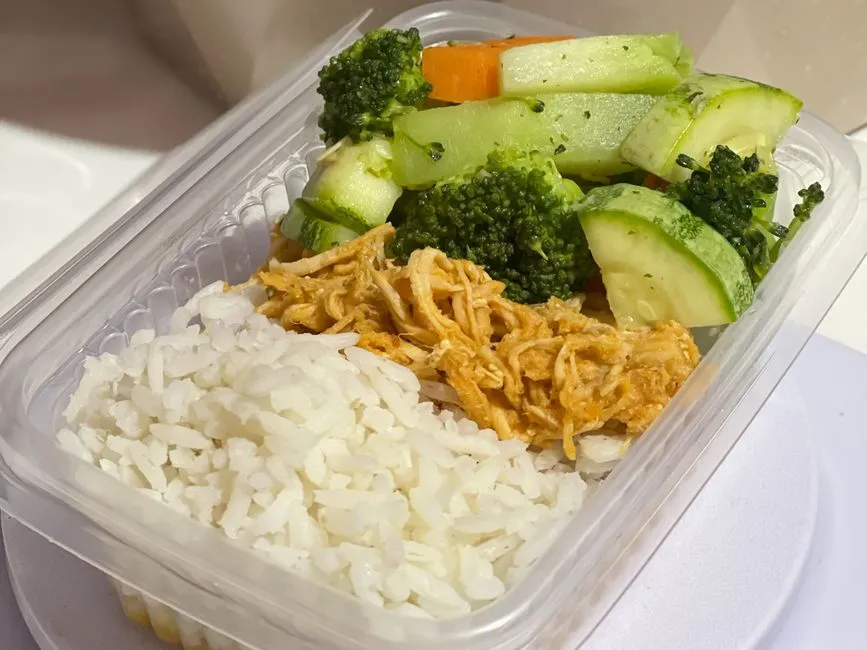
For example, Sunday can produce cooked rice, roasted vegetables, and three portions of chicken. Wednesday can use a new protein with the remaining vegetables and a freshly made sauce. The existing chicken-and-rice meal prep already yields four boxes; for a two-cook week, make only the number you can eat or freeze within the plan rather than assigning all four to the refrigerator automatically.
What should you prepare early?
Prepare early the things whose quality and safety are easy to control:
- shelf-stable seasoning mixes;
- a written shopping and cook list;
- washed whole produce stored correctly;
- cooked grains and beans portioned promptly;
- cooked proteins measured into the first batch;
- sauces that have a documented refrigerator window long enough for the plan; and
- freezer portions labelled on the day they are cooked.
Keep raw meat, poultry, seafood, and their utensils separate from ready-to-eat food. Do not create a five-day raw-protein holding plan from a cooked-leftover rule. The safe refrigerated time for raw ingredients differs by item; check the current official cold-storage chart and the product label.
Items that lose texture quickly are better prepared late or packed separately: cut herbs, crisp toppings, dressed leaves, sliced avocado, toast, and some raw vegetables. Quality failure does not always mean safety failure, but food that looks tired should not be used to justify stretching an expired safety window.
Build the calendar before shopping
Use this seven-line worksheet:
- Meals needed: write the exact lunches or dinners, including any day you will eat elsewhere.
- Cook one: choose the first cook day and number of refrigerator portions.
- Cook two: choose a second cook before the first batch's window closes.
- Freeze route: mark any portion that goes into the freezer on cook day.
- Thaw route: assign a refrigerator-thaw day or a safe reheat-from-frozen method.
- Use-first foods: put short-lived ingredients into the earliest meals.
- Backup: keep one shelf-stable or safely frozen meal for a changed schedule.
Then buy to that count. If the plan needs five lunches and one day is a meeting lunch, prepare four—not five plus a vague “extra.” The unassigned box is the one most likely to lose its date.
A visible plan also separates batch arithmetic from appetite. Four servings in a recipe means four servings at that recipe's stated size; it does not guarantee four meals for every person. Weigh or measure the cooked yield once, divide it into the intended number of containers, and note whether the portion was enough after eating.
Cool each batch promptly
The storage window assumes the food entered refrigeration safely. FoodSafety.gov says to refrigerate cooked leftovers within 2 hours, or within 1 hour when the outside temperature is above 90°F (32°C), and to use shallow containers for rapid cooling.
Before cooking, clear refrigerator space and set out the correct number of clean containers. When food is ready:
- Divide it into shallow portions rather than leaving a deep pot on the counter.
- Keep raw-food tools and surfaces away from cooked portions.
- Label each container with the cook date and intended meal.
- Refrigerate or freeze promptly within the official time limit.
- Keep the refrigerator at 40°F (4°C) or below and verify it with an appliance thermometer.
Do not wait for a large pot to reach room temperature. Do not stack hot, deep containers so tightly that cold air cannot move around them. Follow container and refrigerator manufacturer limits for hot food and thermal shock.
Use the freezer for days beyond the fridge plan
Freezing pauses the practical refrigerator schedule, but it does not repair food that already sat too long. Freeze the designated portion promptly on cook day, in a freezer-suitable container with headroom where the food may expand. Label the dish, cook date, and portion count.
The FoodSafety.gov cold chart distinguishes safety from quality: food held continuously at 0°F (-18°C) or below can remain safe indefinitely, while its listed freezer periods are quality guidance. Texture, flavor, freezer burn, and packaging still matter.
USDA FSIS leftover guidance identifies refrigerator, cold-water, and microwave thawing as safe routes and says frozen leftovers can also be reheated without thawing. Cold-water and microwave routes carry additional handling requirements, so use the full current directions rather than borrowing only the method name. For a simple office-week plan, transfer a sealed portion to the refrigerator with enough time to thaw, then keep it refrigerated until reheating.
Reheat the portion, not the entire batch
FoodSafety.gov sets 165°F (74°C) as the reheating temperature for leftovers. Use a food thermometer and check more than one place in a dense or mixed meal. In a microwave, cover loosely with a microwave-safe lid, stir or rotate for even heating, allow the stated standing time, then check again.
Add moisture according to the food. A spoonful of water can soften rice; sauce can protect pasta; broth can loosen beans or stew. Keep crisp and fresh components out until the hot portion is ready.
Reheat only what you intend to eat. Repeatedly warming and cooling a large container adds handling and makes the time record difficult to follow. If the office refrigerator is not reliably 40°F (4°C) or below, use an insulated lunch bag with adequate cold sources and follow current packed-lunch guidance.
The full meal-prep reheating guide covers microwave, oven, and stovetop methods without treating a timer as proof that the center is hot.
Adapt the rhythm to your week
If you work four days
Cook two portions twice, or cook three and one. Do not prepare five simply because meal-prep containers are sold in sets.
If Wednesday is your busiest night
Move the second cook to Tuesday evening, freeze Thursday and Friday portions on Sunday, or cook a fast component such as eggs, beans, or a tested quick recipe while reusing a prepared base.
If you cook for two people
The Sunday block needs six portions for three shared lunches; the Wednesday block needs four for two shared lunches. Count portions, not containers. One large container holding two servings still represents two planned meals.
If plans change
Move a still-within-window meal forward, freeze it promptly while it remains within safe handling limits, or discard it when the date or handling is uncertain. Do not reset the cook date when transferring food to a new container.
Audit the plan after Friday
Keep the parts that removed work and change one part that did not.
Ask:
- Did every container have a cook date and planned meal?
- Did the Wednesday cook happen, or should the freezer take that role?
- Which component lost texture first?
- Did any portion go uneaten because the yield was wrong?
- Was refrigerator space ready before cooking?
- Did reheating reach 165°F (74°C) without drying the meal?
The answer is not necessarily a bigger Sunday session. A useful meal-prep week is one whose food fits the safety window, whose second cook is small enough to repeat, and whose Friday lunch still feels like lunch.
Sources
- FoodSafety.gov: People at Risk of Food Poisoning - 2-hour and hot-weather 1-hour cooling limits, shallow containers, four-day leftovers, and 165°F reheating.
- FoodSafety.gov: Cold Food Storage Chart - 40°F refrigerator, 0°F freezer, 3-to-4-day categories, and safety-versus-quality distinction.
- FoodSafety.gov: Safe Minimum Internal Temperatures - cooking and reheating endpoints.
- USDA FSIS: Leftovers and Food Safety - thawing and reheating routes for frozen leftovers.