Chicken and Rice Meal Prep: Four Balanced Boxes
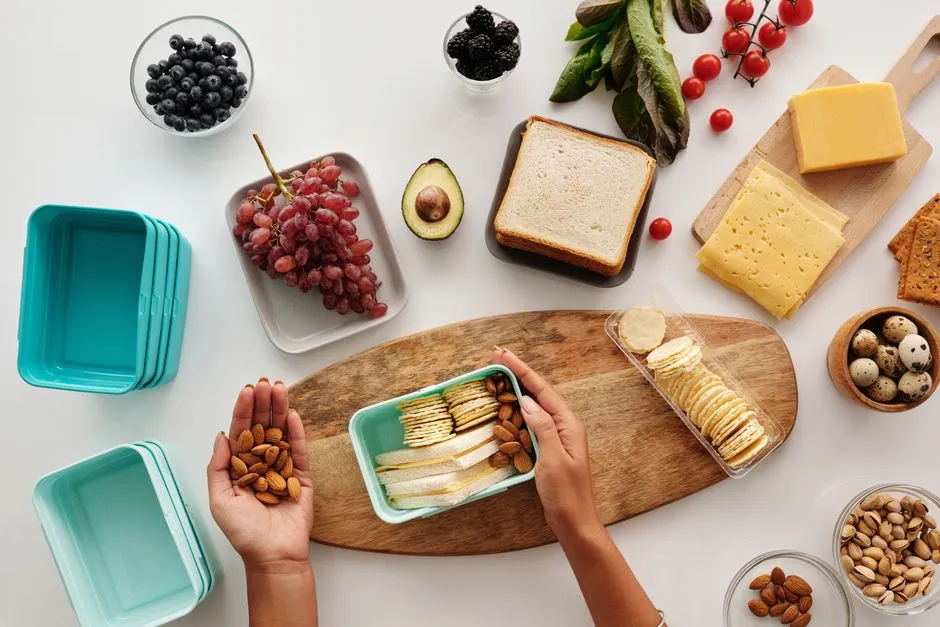
- Four boxes, weighed after cooking
- Recipe at a glance
- Ingredients
- Prepare two pans and a clean sauce jar
- Start the rice
- Roast the sweet potato first
- Cut and season chicken safely
- Add broccoli and turn the chicken
- Verify every chicken zone reaches 165°F
- Weigh each cooked batch
- Cool promptly
- Refrigerate three and freeze one
- Reheat without drying out
- Sensible substitutions
- Transport lunch cold
- Make the batch fit your week
Four boxes, weighed after cooking
This chicken and rice meal prep produces four complete boxes without pretending raw and cooked weights are interchangeable. Chicken loses water. Rice gains it. Vegetables shrink at their own separate rates, apparently after consulting nobody.
Cook each component, weigh the finished batch, divide that number by four, and build equal portions. Refrigerate three boxes for the next 3 to 4 days and freeze the fourth promptly if it will be eaten later.
The recipe uses two sheet pans so raw chicken juice never coats vegetables that may finish sooner. Chicken must reach 165°F (73.9°C) in every checked piece.
Recipe at a glance
- Yield: 4 meal-prep boxes
- Preparation: 25 minutes
- Concurrent cooking: 45 to 53 minutes
- Portioning and cleanup: 15 minutes
- Total: 1 hour 25 minutes to 1 hour 33 minutes
- Oven: 425°F (218°C)
The rice is the longest component: 5 to 8 minutes to reach a boil + 30 to 35 minutes simmering + 10 minutes covered rest = 45 to 53 minutes. Chicken and vegetables roast during that window. Total time is 25 + 45 to 53 + 15 = 85 to 93 minutes.
Oven output, chicken piece size, pan material, and rice variety affect timing. Temperature and texture—not the schedule—determine when each component leaves heat.
Ingredients
Brown rice
- 240g long-grain brown rice
- 480ml water
- 3g fine salt
Chicken
- 680g boneless, skinless chicken breast
- 15ml neutral oil
- 8g fine salt
- 4g smoked paprika
- 2g granulated garlic
- 2g ground black pepper
Vegetables
- 600g sweet potato, peeled and cut into 3/4-inch cubes
- 400g broccoli florets, cut into similar bite-size pieces
- 30ml neutral oil, divided
- 4g fine salt, divided
- 2g smoked paprika
- 2g granulated garlic
- 1g black pepper
Lemon dressing
- 45ml extra-virgin olive oil
- 30ml lemon juice
- 10g Dijon mustard
- 5ml maple syrup
- 2g fine salt
- Black pepper to taste
Check mustard, spices, and every packaged ingredient for allergens and dietary needs. The recipe is not certified allergen-free merely because the ingredient list looks simple.
Prepare two pans and a clean sauce jar
Heat the oven to 425°F. Line two large rimmed sheet pans with parchment or foil according to the pan manufacturer's guidance. Label one pan for raw chicken and keep it on one side of the workspace.
Mix the dressing in a clean lidded jar before raw chicken work. Combine 45ml olive oil, 30ml lemon juice, 10g mustard, 5ml maple syrup, and 2g salt. Shake until blended, then refrigerate.
The dressing yields roughly 90ml after mustard and syrup volume join the 75ml oil-and-juice base. Divide it into four 22.5ml portions, or keep the jar cold and measure about 22ml at serving. Do not brush it onto raw chicken.
Start the rice
Rinse 240g long-grain brown rice under cool running water in a fine sieve. Place it in a medium saucepan with 480ml water and 3g salt. The water-to-rice volume-to-mass notation is recipe-specific, not a universal ratio for every brown rice.
Bring to a boil over medium-high heat, about 5 to 8 minutes. Stir once, cover, reduce to the lowest steady simmer, and cook for 30 to 35 minutes. Do not keep lifting the lid.
Remove from heat when the water is absorbed and grains are tender. Leave covered for 10 minutes, then fluff with a clean fork. If your rice package gives materially different instructions for that exact variety, follow the label; the total schedule will change accordingly.
Roast the sweet potato first
Place 600g cubed sweet potato on the vegetable pan. Toss with 15ml oil, 2g salt, 1g paprika, 1g garlic, and 0.5g pepper. Spread into one layer with space between pieces.
Roast for 10 minutes while preparing the chicken. The early start accounts for sweet potato's longer cooking time. After 10 minutes, turn the cubes and return the pan to the oven.
The final sweet-potato roasting time will be 25 to 32 minutes: this first 10 minutes plus 15 to 22 minutes after broccoli joins.
Cut and season chicken safely
On a dedicated raw-meat board, cut the 680g chicken into 1-inch pieces of similar thickness. Wash hands after handling it.
On the chicken pan, toss with 15ml oil, 8g salt, 4g paprika, 2g garlic, and 2g pepper. Spread in one layer. Keep this pan and its utensils away from the vegetables and dressing.
Put the chicken pan in the oven when the sweet potato has completed its first 10 minutes. Roast chicken for 9 minutes before its first turn.
Wash the raw board, knife, hands, and touched surfaces with hot soapy water. Use a clean thermometer and plate for cooked checks.
Add broccoli and turn the chicken
Toss 400g broccoli with the remaining 15ml oil, 2g salt, 1g paprika, 1g garlic, and 0.5g pepper. After sweet potato has roasted 10 minutes, add broccoli to the same vegetable pan, keeping everything in one layer.
Roast the combined vegetables for 15 to 22 minutes, turning once after about 10 minutes. Remove broccoli pieces when bright, browned at edges, and tender to your preference. Continue sweet potato alone if a cube does not pierce easily.
After the chicken's first 9 minutes, turn the pieces. Roast another 9 to 15 minutes, beginning temperature checks at 18 minutes total.
Verify every chicken zone reaches 165°F
Insert a clean instant-read thermometer into the centre of several thick pieces from different pan areas. USDA requires all poultry to reach at least 165°F. If any checked piece is below that, return the pan to the oven for 2 to 3 minutes and check again.
Do not rely on white colour or clear juice. Small pieces can finish at different times; remove verified pieces to a clean bowl if needed while thicker ones continue.
Typical chicken time is 18 to 24 minutes, which fits inside the rice's 45-to-53-minute concurrent window. Do not return cooked chicken to the raw cutting board or pan utensil.
Weigh each cooked batch
Set a clean bowl on the scale and tare it. Add all cooked chicken and record the mass. Divide by four. Repeat separately for rice, sweet potato, and broccoli.
For example only, if the actual yields are:
- Chicken 520g: 520 ÷ 4 = 130g per box.
- Rice 720g: 720 ÷ 4 = 180g per box.
- Sweet potato 480g: 480 ÷ 4 = 120g per box.
- Broccoli 320g: 320 ÷ 4 = 80g per box.
These are example cooked weights, not guaranteed yields. Use the numbers on your scale. Put one-quarter of each component into each of four shallow food-safe containers.
Cool promptly
Keep the containers shallow and leave space around them in the refrigerator. USDA says to refrigerate perishable food within 2 hours, or within 1 hour above 90°F (32.2°C). Do not leave boxes on the counter until completely cold.
Follow container instructions for hot food. Vent lids only as needed during active refrigerator cooling and then seal once chilled, while keeping food protected from contamination. Label each box with the preparation date.
Refrigerate the dressing separately. The cooking session's 15-minute portion-and-cleanup stage ends when food is in shallow containers, refrigerated within the deadline, and raw-work surfaces are cleaned. Cooling continues safely in the refrigerator.
Refrigerate three and freeze one
Use refrigerated portions within 3 to 4 days. If the fourth will not be eaten in that window, freeze it promptly after safe cooling in a freezer-rated container.
Our meal-prep storage guide explains why freezing on preparation day is preferable to waiting until the last refrigerator day. Broccoli will soften after thawing, but rice, chicken, and sweet potato generally retain acceptable texture.
Thaw a frozen portion in the refrigerator. If using cold-water or microwave thawing, follow official instructions and cook immediately.
Reheat without drying out
Remove the dressing. Add 15ml water over the rice. Cover the meal loosely in a microwave-safe dish and heat for 90 seconds, stir and rearrange, then continue in 30-to-60-second stages.
Check chicken pieces, the rice centre, sweet potato, and broccoli in several places. Every component must reach 165°F. Let stand covered for 1 minute, check again where needed, then add the cold dressing.
Times vary with wattage and portion temperature. Our full guide to reheating meal prep includes oven and stovetop options.
Sensible substitutions
Chicken thighs: Use 680g boneless skinless thighs. Keep pieces similar and verify 165°F. Timing may change.
White rice: Use 240g but follow the package water and time. Divide the actual cooked weight by four.
Cauliflower: Replace 400g broccoli with 400g florets and begin checking after 15 minutes. Keep it on the vegetable pan.
Squash: Replace 600g sweet potato with 600g peeled butternut squash cubes. Begin checking at the same time, expecting potential variation.
Vegetarian version: Do not simply remove chicken and call the remaining box nutritionally equivalent. Use a developed tofu, bean, or lentil variation and follow its allergen and food-safety requirements.
Transport lunch cold
When carrying a box away from home, use an insulated bag with enough frozen gel packs to keep it at 40°F or below until refrigeration. Do not leave it in a warm car or desk drawer. At the destination, refrigerate promptly and confirm that reheating equipment and a thermometer are available; otherwise pack a meal designed to be eaten safely cold.
Make the batch fit your week
The beginner meal-prep system recommends a three-day horizon. Use sauce, herbs, or a safe crunchy topping to vary serving without changing the base formula.
The exact portion is one-quarter of the actual cooked batch, not a medical nutrition prescription. Adjust future batch size based on hunger and waste, and seek qualified individualized advice when nutrition needs relate to health conditions.
This recipe provides general food-preparation information. Follow current USDA or applicable local guidance, product labels, appliance instructions, and qualified advice for individual dietary, allergy, or health needs. When time or temperature safety is uncertain, discard the food.